Cart
0

Skincare usually means putting something on your face. The RENPHO 4D Red Light Therapy Mask takes a different approach: instead of another serum or cream, it uses controlled wavelengths of LED light.
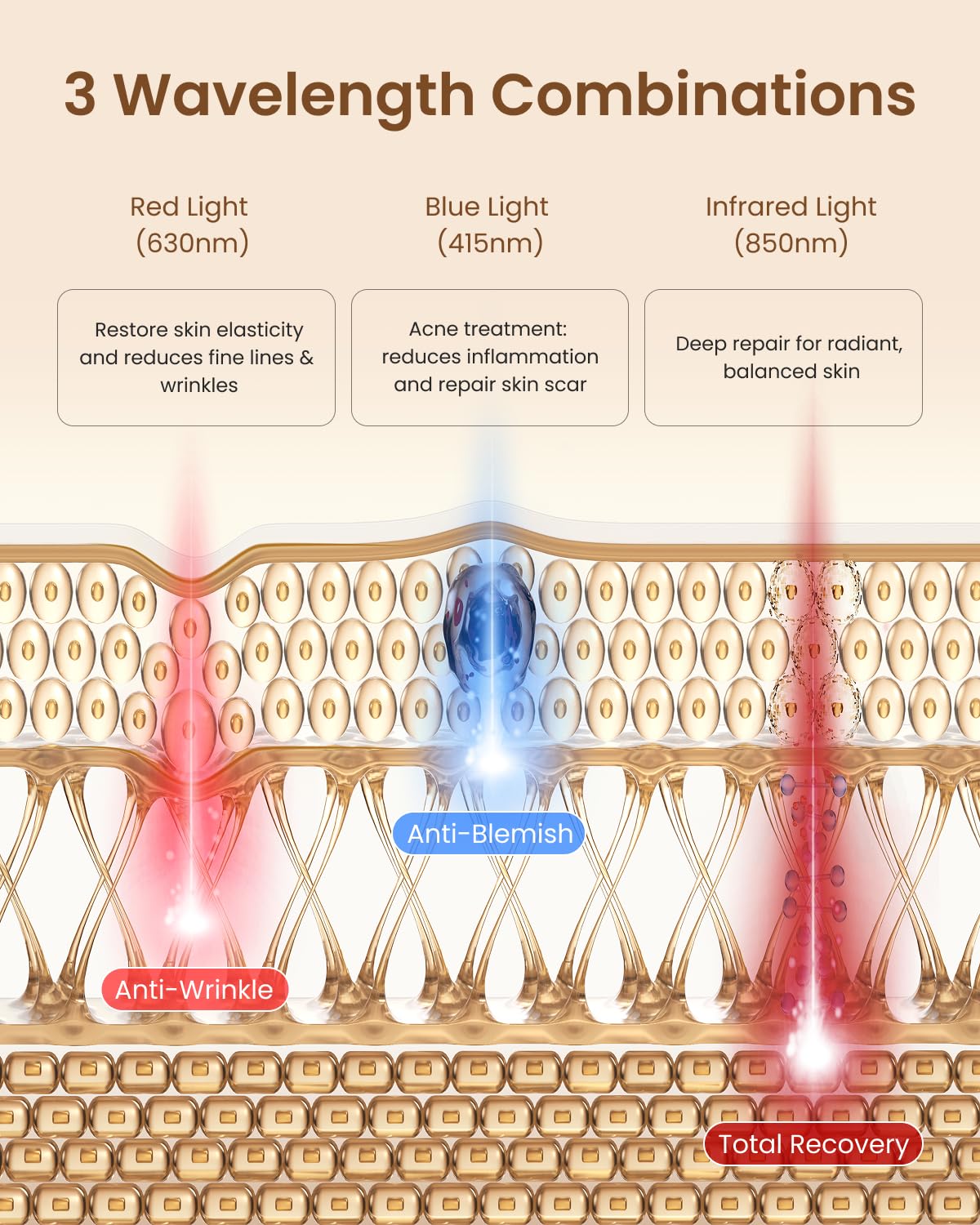
RENPHO's mask combines 630 nm red light, 415 nm blue light, and 850 nm near-infrared light across a 324-LED array. Different modes are intended for different concerns, from visible signs of aging to mild-to-moderate inflammatory acne.
It also offers five intensity settings and selectable treatment times, giving users considerably more control than a basic on/off LED mask.
The interesting part isn't simply that it lights up. It's how those wavelengths are combined.
Three Wavelengths Have Three Different Roles
Not all LED colors are interchangeable.
The RENPHO mask uses 630 nm red light alongside 850 nm near-infrared light in its anti-wrinkle mode. Red and near-infrared wavelengths are commonly used in photobiomodulation research investigating skin rejuvenation and visible signs of aging.
The second option uses 415 nm blue light, which RENPHO indicates for mild-to-moderate inflammatory acne.
A third mixed mode combines red, blue, and near-infrared light.
That makes the mask more versatile than devices offering red light alone. Someone concerned with both breakouts and visible aging doesn't necessarily need two separate devices.
324 LEDs Are Really About Coverage
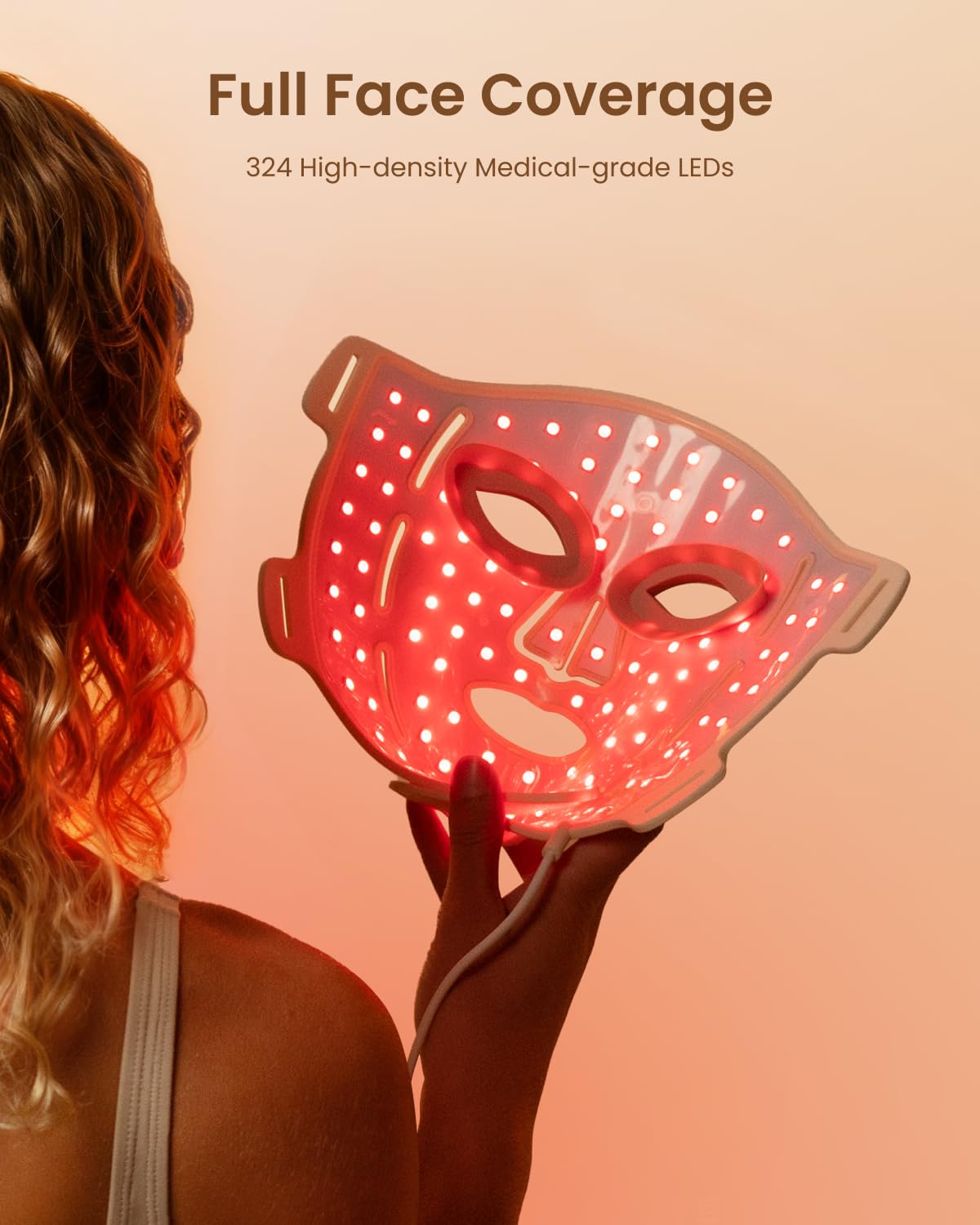
More LEDs don't automatically mean better results.
What a large LED count can improve is coverage.
RENPHO distributes 324 LED diodes across the mask so light reaches areas around the forehead, cheeks, chin, and jaw rather than concentrating treatment into several isolated zones.
That's important because distance matters with LED therapy. If parts of a rigid mask sit far away from the skin, those areas may receive different light exposure.
RENPHO therefore uses a flexible, skin-friendly silicone construction designed to conform more closely to facial contours.
The mask itself weighs approximately 210.6 grams, according to its technical documentation, so you're wearing something much lighter than many hard-shell facial devices.
Five Intensity Levels Put You in Control
A skincare device can have impressive wavelengths and still become useless if you dislike wearing it.
RENPHO addresses that with five adjustable intensity levels.
Instead of forcing every user into the same brightness, you can begin at a lower setting and adjust according to comfort and the recommended treatment protocol.
The controller also provides adjustable session lengths. RENPHO lists 10-, 20-, and 30-minute timer options, although users should follow the instructions for their selected treatment mode rather than assuming longer sessions automatically produce better results.
LED therapy is about delivering an appropriate light dose consistently—not keeping the mask on for as long as possible.
Ten Minutes Makes the Routine Easier to Maintain
One advantage of an at-home LED mask is that treatment doesn't require much active effort.
Clean and dry your face, put on the mask, select the appropriate mode and intensity, and allow the device to run for the recommended session.
That makes a 10-minute session relatively easy to fit into an evening routine.
You can use the mask without simultaneously adding another topical active ingredient, although your normal skincare products can generally be applied afterward as appropriate.
Consistency matters more than expecting dramatic results after a single use.
Changes associated with LED skincare are generally evaluated over repeated treatment sessions rather than overnight.
Eye Protection Isn't an Afterthought
Having hundreds of LEDs sitting directly in front of your eyes makes eye comfort an obvious consideration.
RENPHO includes removable eye protection with the mask. The removable design also makes the eye cups easier to clean between sessions.
Users should follow the manufacturer's eye-safety instructions rather than simply removing the protection because they find the light tolerable.
This is especially important with blue light, which is extremely bright at close range.
The mask's soft silicone construction is also designed to reduce pressure against the face compared with rigid plastic shells.
Fit will still vary depending on facial shape, so strap adjustment matters.
What Can You Realistically Expect?
RENPHO markets the red-plus-near-infrared mode around full-face wrinkles, firmness, elasticity, and visible skin rejuvenation, while its blue-light and mixed modes are intended for mild-to-moderate inflammatory acne.
Those are more realistic categories than expecting an LED mask to completely transform your skin.
Red-light therapy shouldn't be treated as a facelift, and blue light isn't a replacement for professional treatment of persistent or severe acne.
Results also depend on skin condition, treatment consistency, device fit, and individual response.
Think of the mask as an additional skincare tool, not something that makes cleansing, moisturizing, sunscreen, or appropriate dermatological treatment unnecessary.
RENPHO 4D Red Light Therapy Mask: Pros and Cons
| Pros | Cons |
|---|---|
| 324 LEDs provide broad full-face light coverage | Requires repeated sessions rather than providing overnight results |
| Combines 630 nm red, 415 nm blue, and 850 nm near-infrared wavelengths | Wearing a full-face mask may feel restrictive to some users |
| Three treatment modes address different skincare concerns | Results vary considerably between individuals |
| Five intensity levels and multiple timer settings provide customization | More complicated than a simple red-light-only device |
| Soft silicone construction and removable eye protection improve practicality | Doesn't replace a complete acne or anti-aging skincare routine |
Who Is This Mask Best Suited To?
The RENPHO makes the most sense for someone who wants to make LED therapy a recurring part of an at-home skincare routine.
Its combination of red, near-infrared, and blue wavelengths is particularly attractive if your concerns aren't limited to one category.
Someone primarily interested in visible fine lines can use the red-plus-NIR mode, while users dealing with appropriate inflammatory acne concerns have access to blue-light treatment without buying another device.
It makes less sense for anyone expecting immediate results or wanting a completely passive skincare product.
You have to wear it consistently.
Final Take: The Controls Matter as Much as the Colors
It's easy to look at an LED mask and focus entirely on the red glow.
RENPHO gives you considerably more to work with.
The 324-LED array combines 630 nm red, 415 nm blue, and 850 nm near-infrared wavelengths, while three modes, five intensity settings, adjustable timers, soft silicone construction, and removable eye protection make the device adaptable to different routines.
The technology still requires realistic expectations. LED therapy works through repeated exposure, and cosmetic improvements aren't guaranteed.
But for someone ready to commit several minutes regularly rather than continually adding another bottle to the bathroom shelf, the RENPHO 4D offers an interesting proposition:
your next skincare step might be light instead of another layer of product.
FAQs
1. What wavelengths does the RENPHO 4D Mask use?
It uses 630 nm red light, 415 nm blue light, and 850 nm near-infrared light.
2. How many LEDs does the RENPHO mask have?
The mask uses a 324-LED array designed to provide broad coverage across the face.
3. Does the RENPHO 4D Mask have different intensity settings?
Yes, it provides five adjustable light-intensity levels.
4. Can the RENPHO mask be used for acne?
Its blue and mixed-light modes are indicated by RENPHO for mild-to-moderate inflammatory acne.
5. How long is a RENPHO LED mask session?
The controller provides 10-, 20-, and 30-minute timer options, with the appropriate duration depending on the selected treatment protocol.


Featured in this review

iboughtthis
iRestore LED Face Mask for Youthful Skin
$399.00
View Deal on Amazon
We may earn a commission when you buy through this link, at no extra cost to you.